Ursula von der Leyen refuses to meet PFAS pollution-affected communities
Brussels, 5 March 2026 – PFAS frontline communities have, for the third time since 2023 [1], had their requests to meet Ursula von der Leyen denied due to “scheduling conflicts”, according to the Commission President’s cabinet.
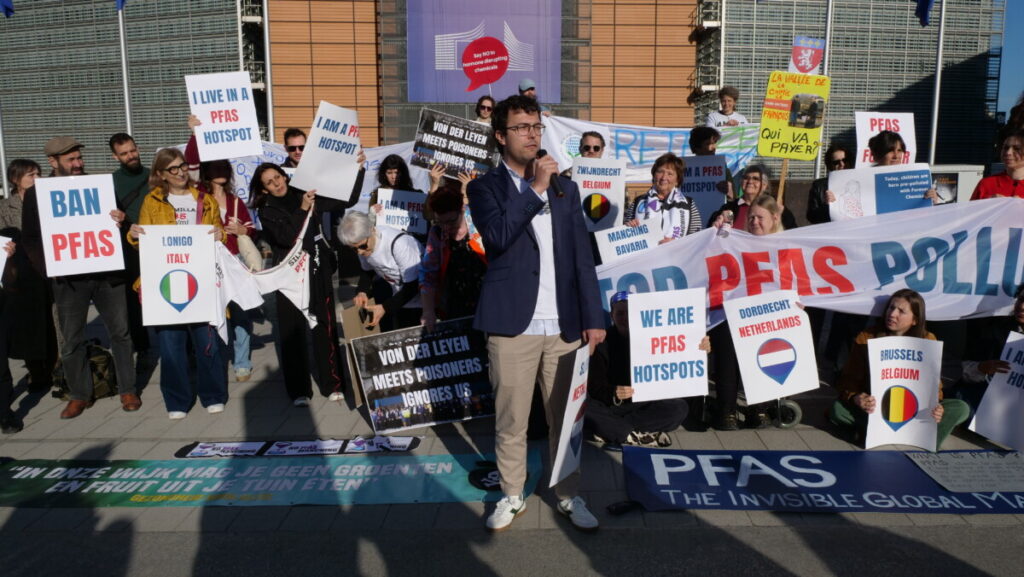
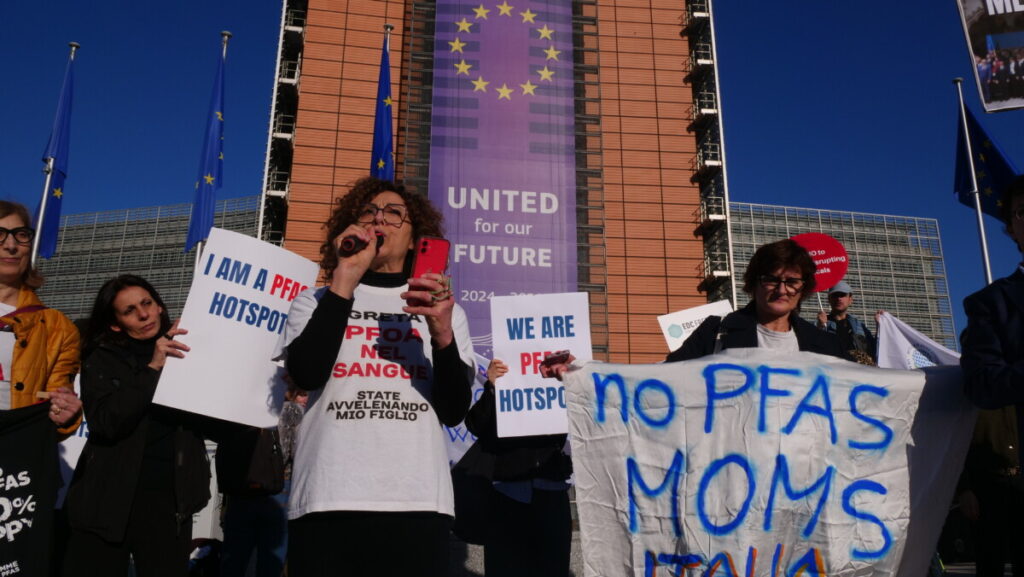
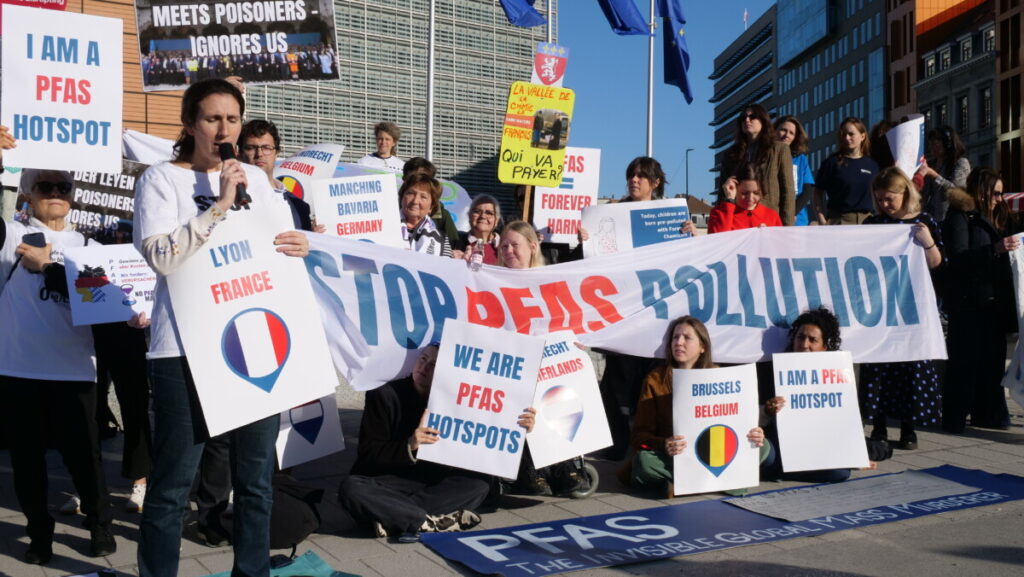
26 people from PFAS hotspots in France, Germany, Italy, Belgium, Denmark and the Netherlands travelled to Brussels with the support of the European Environmental Bureau to share their experiences and personal testimonies with President von der Leyen about how “forever chemicals” are severely affecting their lives.
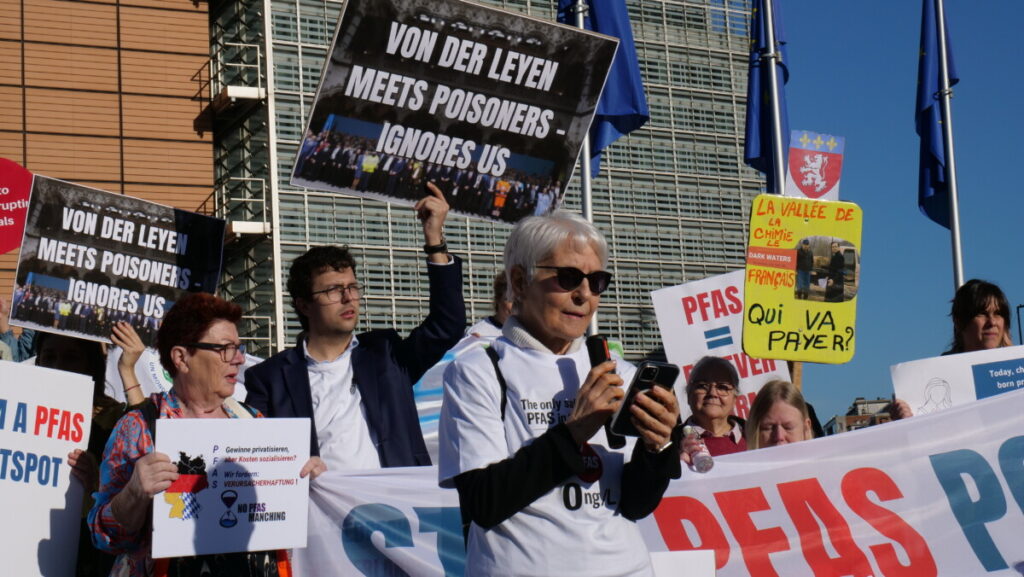
Unable to meet her, they made their voices heard today in an action in front of the European Commission, calling for an end to PFAS pollution. One of their banners read: “von der Leyen meets poisoners, ignores us.”
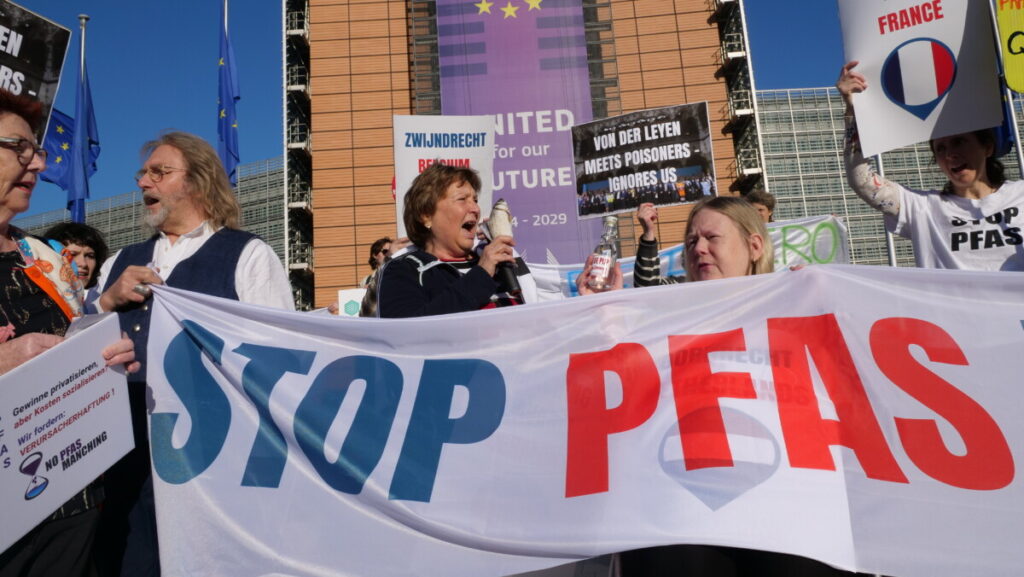
While the Commission’s doors remain closed to citizens demanding bold action on PFAS pollution [2] to protect public health and the environment, they remain wide open to the chemical industry: nearly 70% of meetings held last year by Commission cabinet members reportedly involved industry representatives. On 11 February, for the third year running, Commission President Ursula von der Leyen ignored chemical pollution victims and, instead, addressed EU industry leaders in Antwerp, in an event coordinated by the chemicals industry.
“It is deeply concerning that time has been made available to engage with representatives of the chemical industry, whose activities have had serious and lasting impacts on our lives, while our repeated requests for dialogue have gone unanswered,” said PFAS frontline communities in their letter to von der Leyen.
Across Europe, PFAS frontline communities are mobilising to demand justice and decisive action against forever chemicals. Studies show that PFAS are present in the blood of nearly every person tested. “I am a PFAS hotspot” read another banner during the action by PFAS frontline communities, some of whom have recorded PFAS blood levels more than 63 times higher than the health-based guidance threshold. PFAS pollution is an increasingly concerning issue for Europeans. Investigations have shown that nearly 23,000 sites in Europe are confirmed to be PFAS-contaminated, with an additional 21,500 presumed sites linked to past or ongoing industrial activity.
“In France, over 60,000 people can no longer drink tap water. In Belgium, residents of Ronse – just 54 km from Brussels – have discovered severe contamination of their environment and bodies. In Germany, a recent study found that 69% of fish are polluted with PFAS,” the affected citizens reminded von der Leyen in their letter.
PFAS frontline communities have also expressed deep concern over recent statements by Vice-President Séjourné and Commissioner Roswall, suggesting restrictions should be limited to consumer uses of PFAS. Across Europe, people are exposed through drinking water and food, largely driven by emissions from industrial production, use, and waste sites. “Focusing only on consumer uses ignores the largest sources of contamination and fails to effectively address the PFAS pollution crisis,” stressed PFAS-polluted communities.
The social, environmental, and economic costs of PFAS pollution are staggering. According to a European Commission study, if current levels of PFAS pollution continue until 2050 without regulatory action, the total cost will reach approximately €440 billion. Tackling PFAS releases at the source by 2040 could save €110 billion, whereas treating contaminated water alone would cost up to €1,7 trillion.
More than 343,000 people have supported this petition calling on European leaders to defend the laws that protect people and nature, rather than bow to polluters and vested interests.
“Chemical safety is a public interest issue. Decisions must be guided by science, the precautionary principle, and the EU’s treaty obligation to ensure a high level of protection for human health and the environment. Our demands remain clear: we urge the Commission to champion bold initiatives to protect European citizens and the environment,” [3] the PFAS affected communities stated.
“While political leaders debate with polluters over weakening laws meant to protect citizens, Europe’s chemical pollution crisis continues to escalate. Europeans need decision-makers to deliver REACH’s primary objective – a high level of protection for human health and the environment – without delay and without compromise,” [4] said Tatiana Santos, Head of Chemicals Policy at the European Environmental Bureau.
Today, the PFAS frontline communities in Brussels will also take part in a high-level policy event at the European Parliament to discuss accountability, justice and the urgent need for EU action on PFAS. The event is organised by the European Environmental Bureau (EEB), ClientEarth, Renew Europe, and the Greens/EFA, and hosted by MEP Gerben-Jan Gerbrandy, MEP Sigrid Friis, and MEP Saskia Bricmont.
ENDS
QUOTES FROM PFAS FRONTLINE COMMUNITIES
“Unfortunately, once again the voice of the many activists who devote time and energy to denouncing very serious situations such as pollution by persistent, bioaccumulative and toxic substances to institutions and rulers will not be heard. PFAS contamination is ubiquitous throughout Europe, and the toxic effects on citizens’ health are largely confirmed by scientific studies. This problem needs to be addressed URGENTLY, there is no more time, we are calling for the health of the environment and citizens to become the priority and for “the precautionary principle” to be truly applied.” Said Catia De Cao, Rete Zero Pfas Veneto, Italy info.veneto@zeropfas-italia.org
“Mrs. von der Leyen, once again you refuse to meet with us citizens contaminated by PFAS and favour relationships with the chemical companies that poisoned us. How would you feel if your daughter Sophia, or your daughter Victoria, or your son David had carcinogens in their blood? Would you really behave the same way, with the same indifference, when faced with the risk of them contracting related diseases?” Cristina Cola, Mamme no pfas, Italy cristina.cola@mammenopfas.org
“PFAS: von der Leyen stands for privatizing profits and socializing costs. The PFAS preference must switch sides. “Doris Schmidt NO PFAS Manching e. V., Germany, doris.schmidt@pfc/manching.de
“We are deeply worried by the continued approach of compromise with the chemical industry. Many residents of highly contaminated areas now refer to their communities as “sacrifice zones,” because they feel their health and their children’s future have been traded for industrial interests.” Vitalia Murgia ISDE ITALY, vitalia.murgia@gmali.com
“To back down means nothing other than being deaf, blind, and mute to the worries and problems of those affected by PFAS, while at the same time giving industry free rein.” Gudrun Lemle NO PFAS Manching e.V., Germany, gudrun.lemle@pfc-manching.de
“Dear Mrs Von Der Leyen, PFAS poisoned my family and me from the tap water. Do you imagine what kind of damage, cost and health adverse impacts we are suffering? Why do not prioritise alternatives, most of them already available? Why are we leaving a contaminated world, threatening the future of our children? Are profits so important?” Claudia Mazzasette, Mamme no pfas, Italy, mazzasette49@gmail.com
“ADiC represents the rights of citizens exposed, in their daily lives, to a PFAS contaminated environment. We ask for a clear health-first principle: when warning signs appear, stronger protective measures should start immediately. Not after years, not after long legal disputes, not when damage is already done. Health must come first: before economic interest and administrative delays. This is a matter of basic civilization.” Isabella Maggiorelli ADiC Toscana aps, Italy, isabellamaggiorelli@gmail.com
ADDITIONAL INFORMATION
[1]
Previous requests for a meeting:
- 29 January 2026 PFAS pollution: Affected Communities’ response to our outstanding request for action and dialogue
- 29 January 2025 PFAS pollution: European affected communities’ call for action and request for a meeting
- 2 October 2023 Invitation to receive testimonies from chemical pollution victims
[2]
PFAS, also known as “forever chemicals,” are linked to cancer, infertility, thyroid disease, obesity, immune system suppression, and many other health disorders. This pollution has been described as the “worst contamination crisis humanity has ever faced.”
[3]
Their demands include: Ban PFAS chemicals to stop further harmful pollution at source – the proposed universal PFAS restriction is the most effective way to do this; The EU must also strengthen pesticides and biocides regulations to prohibit the use of PFAS since these are not covered by the proposed universal PFAS restriction; Comprehensive monitoring and remediation of contaminated irrigation and drinking water and soil from all European PFAS pollution hotspots; Health, psychological, legal and financial redress to those harmed by decades of negligence, ensuring justice and relief for victims; Ensure the polluters pay for monitoring, remediation and compensation costs; Accelerate the development and adoption of safe alternatives to PFAS.
[4]
On 19 February, the European Environmental Bureau, together with 36 other European NGOs, released a joint statement urging EU leaders to fulfil their responsibilities and ensure a high level of protection for human health and the environment. Protection first: EU leadership to deliver safe chemicals with high protection of people’s health and the environment
CONTACT
EEB Communications Officer for Chemicals, Beatriz Ortiz Martínez, +32 493 47 42 42 beatriz.ortiz-martinez@eeb.org (ES/EN/FR)
