Heatwaves fuel dangerous smog across Europe as civil society calls for methane cuts
22 June 2026, Brussels – Parts of Europe are suffering through the second heatwave of the year leading to dangerous spikes in ground-level ozone pollution with devastating consequences for human and environmental health, warns the European Environmental Bureau (EEB) – Europe’s largest network of environmental NGOs.
Extreme temperatures have serious health repercussions but the impacts of a photochemical smog, which forms as a result of ground-level ozone pollution, remains little known. In 2022, exposure to ozone pollution, driven largely by methane from industrial agriculture practices, led to an estimated 70,000 premature deaths and €2 billion in crop losses across the EU [1].
As scientists warn of a ‘super El Niño’ this summer – a natural phenomenon that occurs every few years and pushes up global temperatures [2] – ozone levels are already breaching EU air quality standards (anything above 120 mg/m3) and endangering human lives. Heatwaves exacerbate the problem, leading to breaches of the alarm level threshold (beyond the 240 mg/m3). Current health protection measures set a maximum daily eight-hour mean of 120 micrograms per cubic metre (µg/m3) not to be exceeded more than 18 times per calendar year [3]. In 2024, 77.4% of EU measuring stations exceeded this limit [4]. This rose to 85.4% in 2025, with the Lombardy region of Italy one of the hardest hit regions, with EEB member Legambiente Lombardia reporting 6 alarm breaches by June 2025, as reported by EEB in 2025 [5].
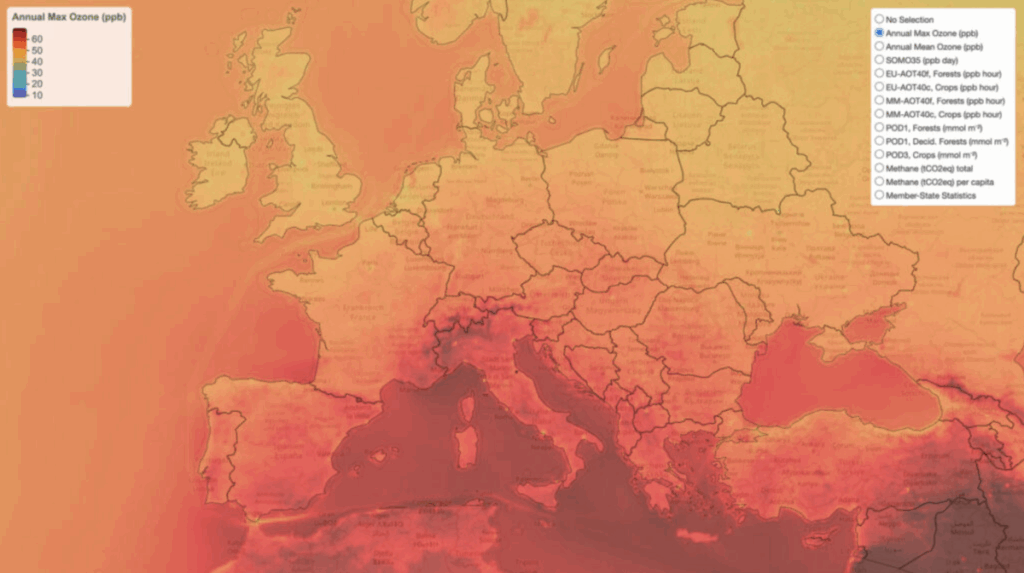
This year, Legambiente Lombardia already raised the alarm in May as the Po Valley experienced dangerous breaches of the EU threshold [6]. The toll that methane and ozone is having can be explored across Member States in this interactive map released by Ricardo in February 2026 [7].
Luc Powell, Senior Policy Officer for Air Quality and Agriculture at the EEB, said:
“Once again dangerous spikes in ground-level ozone pollution, fuelled by heatwaves, are sweeping across the continent. The resulting photochemical smog chokes the air we breath, damages crops, and places additional pressure on already stressed ecosystems.
As a major driver of ozone, reducing methane is one of the fastest and cost-effective ways to cut pollution and cool the planet. Yet intensive agriculture, the main source of methane emissions, is still given a free pass to pollute. The EU currently has a key opportunity to act on methane and clean our air, protect health, and slow climate breakdown.”
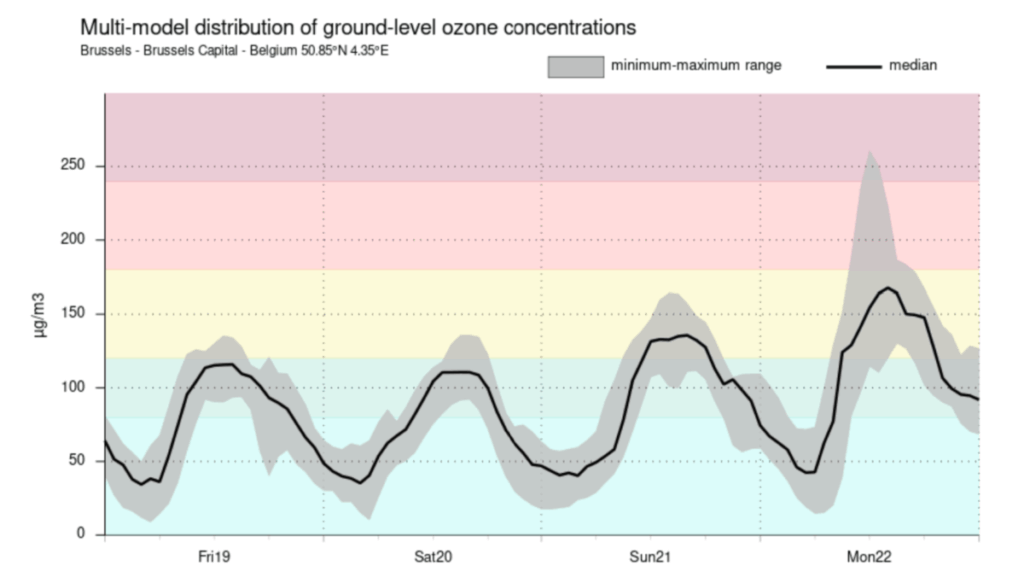
Ground-level ozone pollution, Brussels 19-22 June 2026, from The Copernicus Programme
The source
Ozone is formed when pollutants such as methane react with nitrogen oxides (NOX) in the presence of sunlight. While the exact mix of responsible pollutants is complex, the latest report by Ricardo identifies methane as being responsible for 35–37% of harmful ground-level ozone [8], making it a critical target for air quality improvement. Unlike other pollutants, the EU lacks binding targets to reduce methane from agriculture (responsible for 57% of emissions) which undermines both climate ambition and efforts to tackle air pollution.
Civil society calls for action
Methane is currently excluded from the National Emission reduction Commitments (NEC) Directive and the Gothenburg Protocol (which mirrors the NEC Directive at UNECE level), ignoring a major opportunity to recognise the role methane plays in ozone formation and support efforts to reduce emissions. With negotiations ongoing, the EU has an opportunity to protect public health and tackle the climate crisis by putting in place targets to reduce methane emissions.
To support a reduction of methane emissions in agriculture, civil society urges policymakers to protect public health by introducing targets and supporting farmers in their efforts a shift to agroecological practices with a focus to: reduce numbers and density of farmed animals; improve manure and feed management; and better irrigation management in rice paddies.
ENDS
Notes for editors
[1] European Environment Agency: Methane, climate change and air quality in Europe: exploring the connections
[2] Potentially historic El Niño to come, analysis shows humanitarian toll: Based on June 2026 seasonal climate forecasts, contributing to the Copernicus Climate Change Service, an El Niño occurrence this year is virtually certain.
[3] Copernicus: Europe affected by early episodes of Ozone pollution
[4] European Environment Agency: April 2026 report on Ozone – O₃
[5] EEB press release: Ozone onslaught across Southern Europe continues with six alarm threshold spikes already this year
[6] Legambiente Lombardia: Clima ed emissioni: con il caldo anticipato arriva prima anche lo smog fotochimico
[7] Methane Matters Interactive map: Explore methane emissions levels and impacts of ozone concentrations across Member States.
[8] Methane Matters: Economic impacts of O3 exposure
Photo by Richard Vanlerberghe on Unsplash
