
Why does this matter?
Big Agri profits. We get the pollution bill.
Across Europe, industrial agriculture is polluting our waters, poisoning our air, and degrading our soils with excessive amounts of nitrogen. The multibillion-euro clean-up bill lands with us, the taxpayers, while profits flow to a handful of powerful agribusinesses.
This isn’t just bad for health and nature. Many farmers are trapped in a system that pushes them to produce more for less income, using practices that degrade their land. In just 15 years, this system has led Europe to lose 37% of its farms while Big Agri has grown bigger and more industrialised.
And now, instead of fixing this broken system, powerful agricultural interests are pushing to weaken the pollution limits that legally protect our health, our water and our nature.
As you are reading this, people around Europe are experiencing the real-world impacts of nitrogen pollution, the issue is moving from scientific reports to newspaper headlines, social media feeds, and kitchen-table conversations.
We shouldn’t have to choose between thriving farms and clean air and water. And we certainly shouldn’t have to foot the bill for a system designed to maximise profits for a few. Solutions exist. Decision makers just need to act.
Sign the petition to let them know that your health and nature are not for sale, before it’s too late!
Nitrogen pollution in the media
‘I am always tired’: life in the long shadow of factory farming in Europe
The Guardian
Photojournalist Selene Magnolia Gatti documented the effects on human health and wellbeing of those living alongside intensive agriculture.
France ordered to compensate family of jogger killed by toxic algae
Le Monde
France has been declared liable for the death of Jean-René Auffray, who died age 50 during a run where he inhaled poisonous gas emitted by rotting green algae piled along the coast. The court “holds the state liable for negligence due to its failure to implement European and national regulations designed to protect waters from agricultural pollution,” which is “the main cause of the proliferation of green algae in Brittany”.
Why did thousands of dead fish wash up on Spain’s Mar Menor?
El País
Read how intensive agriculture and urban development triggered an environmental catastrophe in Europe’s largest saltwater lagoon.
Denmark’s ‘Pig Election’ Prompts Drinking Water Crackdown. Will Europe Follow Suit?
DeSmog
Denmark’s incoming government is spotlighting highly polluting intensive farming practices, which damage water, land and air, promising to protect citizens health.
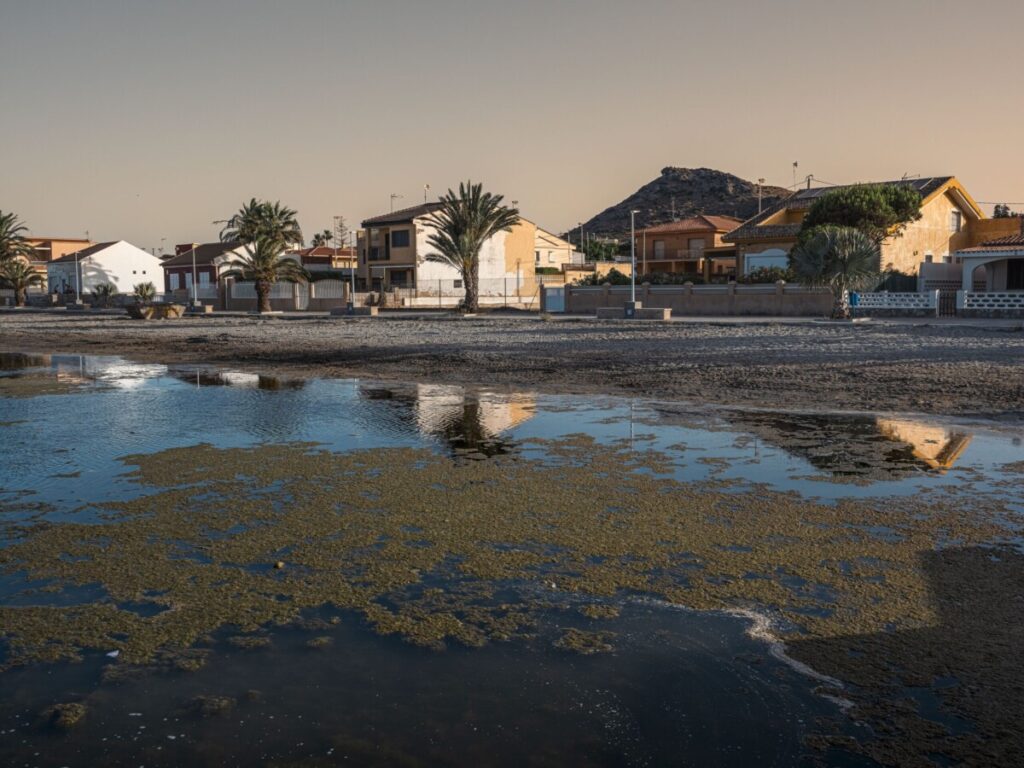
Declined tourism and devalued properties
The accumulation of nitrogen from industrial agriculture has led to the appearance of algae in the lagoon of the Mar Menor, Murcia. The natural degradation of the area has caused a decline in tourism and a devaluation of local properties, some of which have even been abandoned. Spain, Santi Donaire
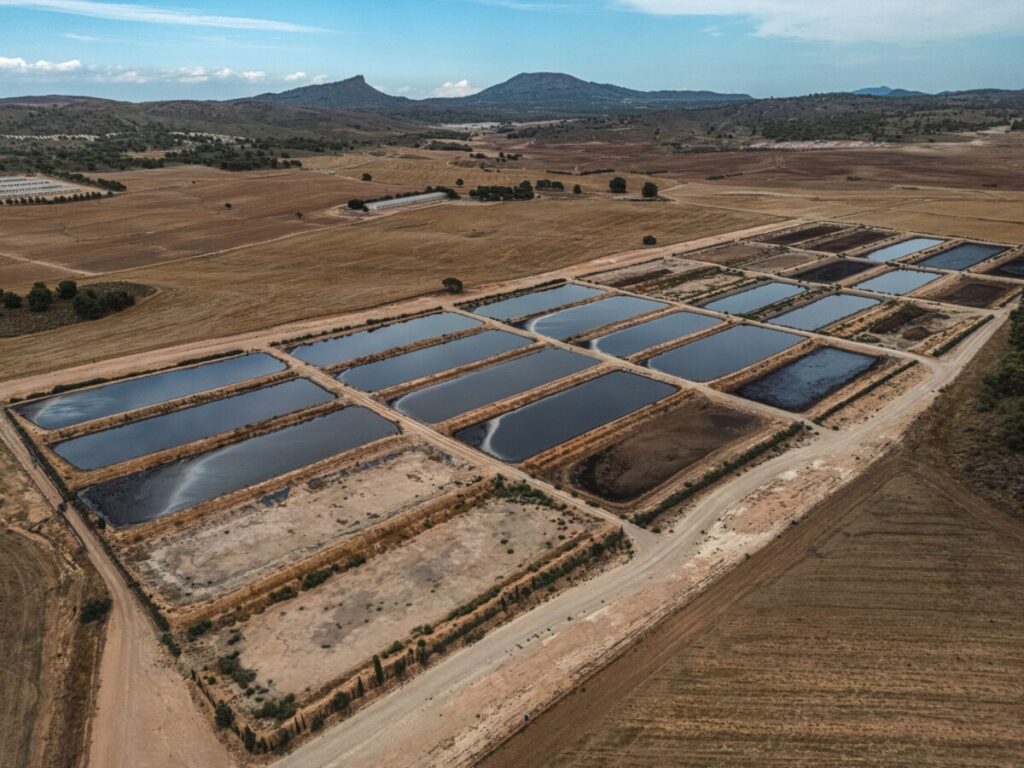
Over 120 Olympic swimming pools of slurry
The CEFUSA industrial complex in Hellín, Albacete, is made up of 12 nuclei or pig farms with a capacity for 150,000 animals. The rafts where the slurry is stored have a dimension of 130,000 square meters, the size equivalent to more than 120 Olympic swimming pools, making this the most polluting pig macrofarm in Spain. The property where the farms are located has a concession from the Segura Hydrographic Confederation to be able to use up to 1,435,225 m3 of water per year, the same amount consumed by almost 29,000 people per year. Spain, Santi Donaire
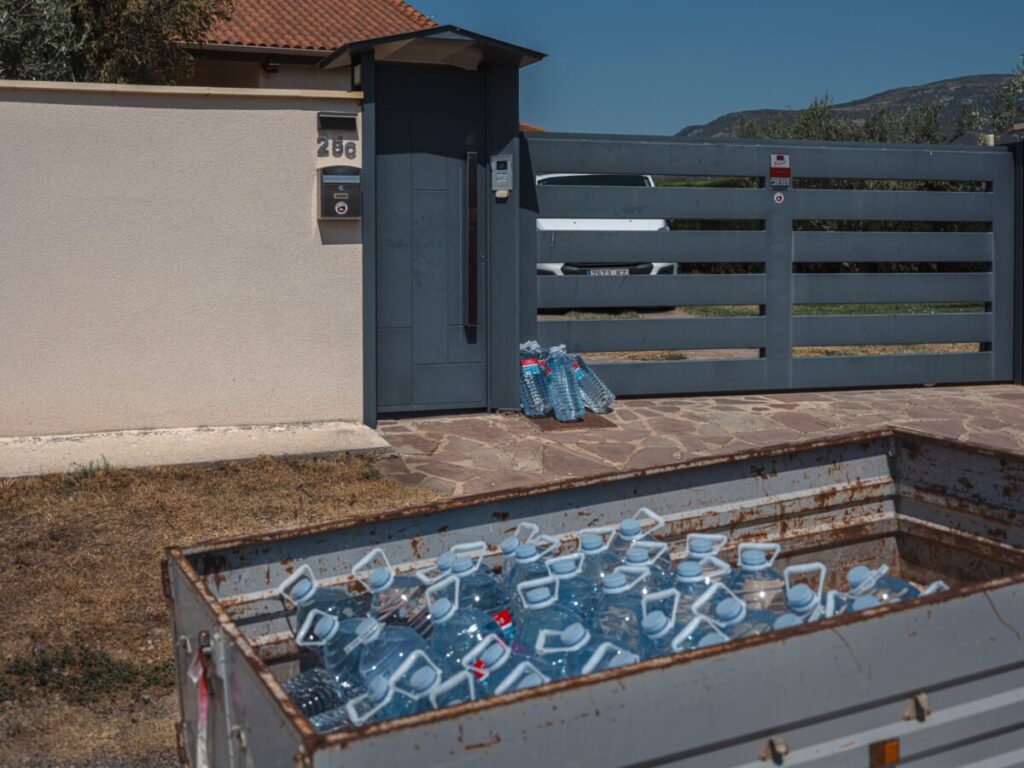
Tap water off limits
A municipal worker from La Sotonera, Huesca, distributes bottled water to the different houses in the town of Lierta due to the prohibition of consuming tap water or the town’s fountain due to the high presence of nitrates. The people who live in the area blame several farms installed in the area for polluting the water. The residues generated by the slurry from the macro-farms cause the water reserves, whether surface or underground, to become highly contaminated. Spain, Santi Donaire
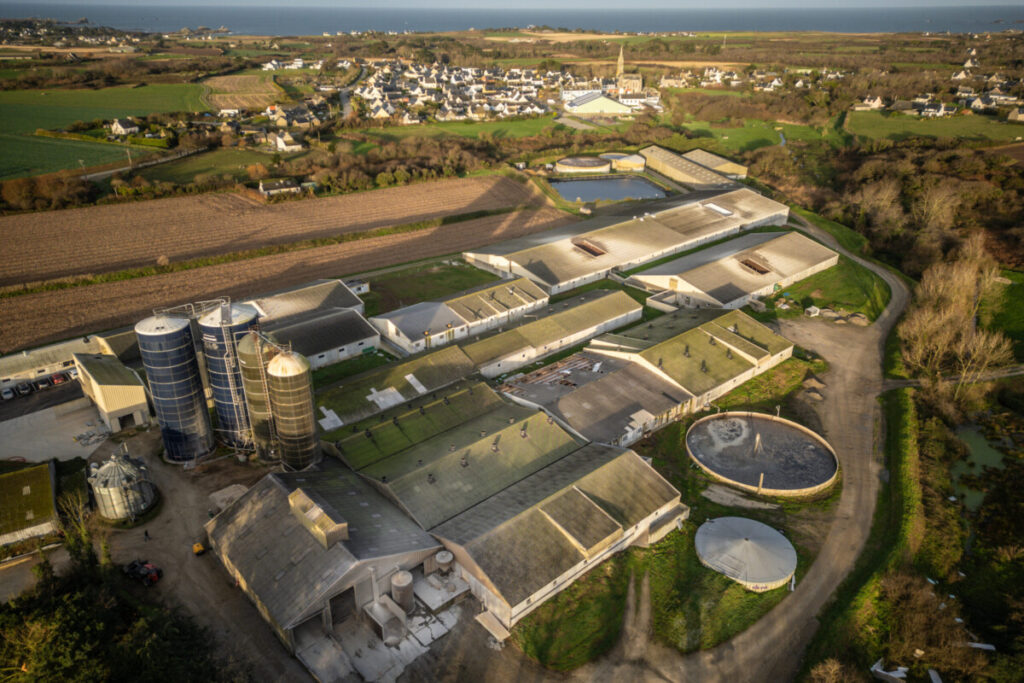
E. coli near you
Aerial view of a pig factory farm near a town and its kindergarten in Landunvez, France. Local surfers and scientists have tested the waters after experiencing symptoms and have found very high levels of E. coli in the stream and seawater. France, Selene Magnolia Gatti
For more images on the consequences of factory farming, check out this online exhibit
Factory Farming: Unveiling the Hidden Costs
Through the lens: a photo essay on factory farming in Europe
But don’t forget to sign the petition first!
