EU risks locking low-carbon cements out of the single market, new report warns
Brussels, 13 July – The EU is betting its cement transition on costly and uncertain carbon capture plans. A new report by the European Environmental Bureau (EEB) finds that cheaper and commercially available alternatives are already cutting emissions but remain locked out by outdated EU standards and procurement rules.
The report, CEMENT IT BETTER, finds that Europe’s biggest opportunity to decarbonise cement lies in reducing and replacing clinker, the highly carbon-intensive ingredient at the heart of conventional cement production.
Scaling existing solutions such as cement blending, clinker substitution, circular materials and resource efficiency could cut emissions by up to 40% today, while innovative low-carbon binders and clinker-free cements could slash emissions by up to 70% or more when combined with renewable energy.
Yet many of the most promising alternatives remain locked out of the EU market. Low-carbon binders and clinker-free cements are already being produced commercially in Europe, but outdated standards still define cement by its recipe rather than its environmental performance, preventing many innovative products from being certified and used at scale.
At the same time, proposed EU measures –including the Industrial Accelerator Act, public procurement initiatives and investment frameworks– risk doubling down on carbon capture and storage (CCS) as the default pathway for cement decarbonisation, despite decades of overpromising, cost overruns and missed delivery.
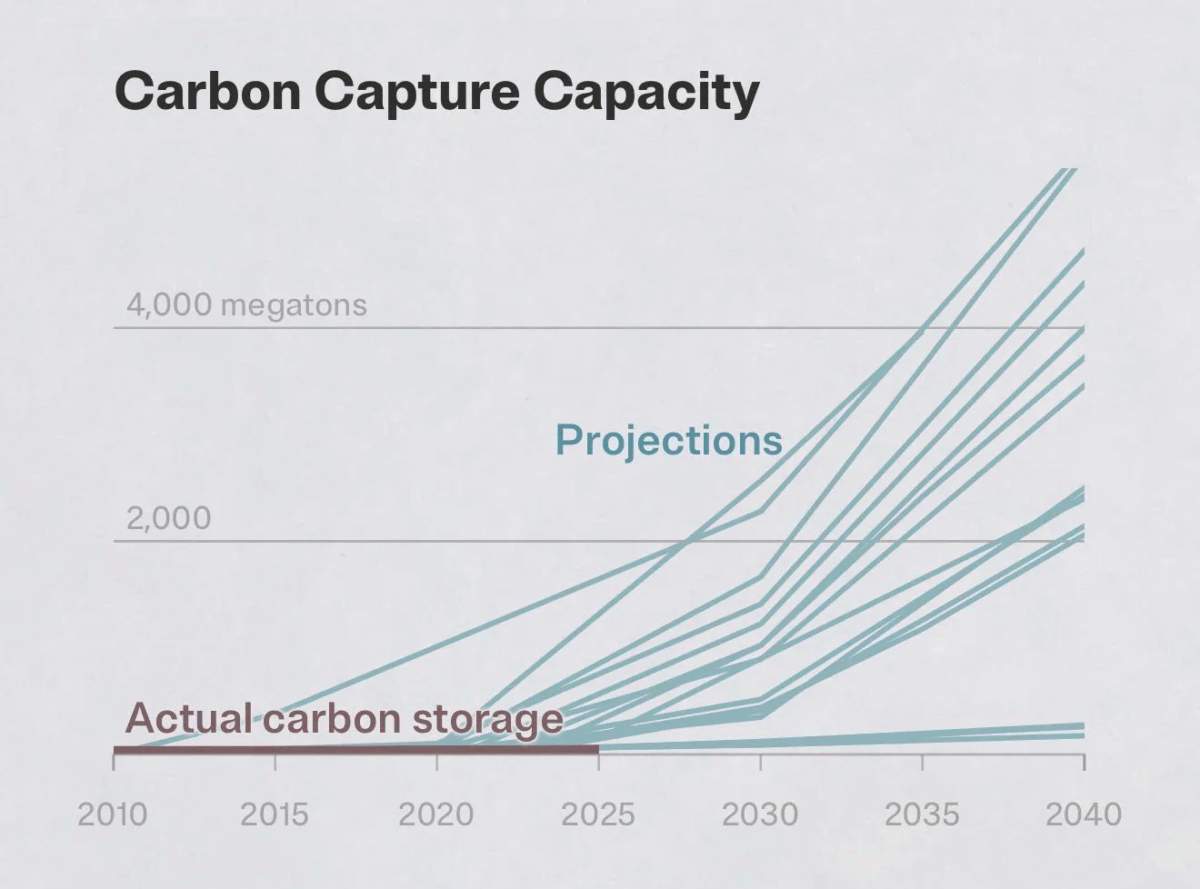
Source: ProPublica based on IEA’s CCUS project database.
Quote
Jai Krishna, Senior Policy Officer for Industrial Production at EEB, said:
“Europe is preparing to create lead markets for low-carbon concrete, but its rules risk locking out some of the cleanest solutions already available. Near-zero and clinker-free cements and concrete are being produced commercially in Europe today, yet many cannot access the single market because standards still protect traditional recipes instead of rewarding environmental performance. If low-carbon cement quotas only recognise carbon capture pathways, Europe risks excluding the very innovations it should be scaling. The EU should reward solutions that prevent emissions, not wait to capture them afterwards.”
Background
Cement is responsible for around 4% of EU industrial emissions, largely because producing Portland clinker –the main ingredient in conventional cement– releases large amounts of process CO₂ through the chemical transformation of limestone.
Because around 60% of cement emissions come from this chemical process, carbon capture has often been presented as the main pathway to decarbonisation.
However, the report finds that Europe can significantly reduce these emissions before capture is needed by transforming how cement is produced and used.
Key solutions include:
- Reducing clinker content in cement, replacing part of the most carbon-intensive ingredient with alternative materials;
- Scaling up alternative low-carbon binders, including cement formulations that avoids clinker and process emissions altogether;
- Using recycled construction materials and recovered cement components as circular feedstocks;
- Reducing cement and concrete demand through material efficiency, better design and longer-lasting buildings.
Existing solutions could reduce cement emissions by up to 50% at near-zero additional cost, while further innovation could deliver even deeper cuts.
Some advanced low-carbon cements already achieve carbon reductions of 70-75% compared with conventional Portland cement, and have been used in real construction projects, including the Athletes’ Village for the 2024 Summer Olympics and infrastructure projects linked to the Grand Paris Express.
Unlocking low-carbon cements
More than 30% of EU cement production capacity may require major reinvestment by 2030, creating a unique opportunity to shift towards cleaner production models.
The report concludes that Europe’s cement future will depend less on waiting for new breakthroughs and more on removing the barriers preventing existing solutions from scaling.
“The cement transition is ready to move. Europe now needs to open the door.”
ENDS
